
Mental Health Awareness + Strategies
about
Mental health is the single most important aspect to everyone’s life or at least it should be as it affects all 8 dimensions of wellness; emotional, physical, occupational, social, spiritual, intellectual, environmental, and financial. Unfortunately, in our industry mental health is often not even number 5 on our priority list or at all. If anyone knows me or have worked with me, knows I am huge advocate to mental health. I spent an hour speaking with Demetria Dove Nickens, MS who hosts our Mental Health First Aid training, to help bring awareness especially those who cannot attend this event. Demetria has been involved with mental health since 2005 with degrees in phycology, sociology, and her master’s in counseling phycology.
Q&A
Below are questions from our conversation with answers to help. Please note all answers vary between given past trauma, family mental health, current mental health, and persons.
Is there a difference between men and women with how they show/ experience /decompress from mental health?
Yes, typically women are more vocal or expressive when their mental health is impeding, while men are quite and try to bear the storm alone quietly. Which support the 3.90x more suicides in men than women. In 2021 men died by suicide 3.90x more than women with a total of 48,138 suicides in the year of 2021 on average 132 suicides per day in America only. There is no gender to mental health it is equally important for everyone.
What are good techniques to regain yourself when feeling overwhelmed, stressed, and/or depressed at work?
Overwhelmed: The goal is to recenter or refocus which can be achieved through breathing techniques. When you are overwhelmed, you tend to breath differently which affects the brain and mental health. The following breathing techniques can help calm your nervous system to prevent it from going into flight or fight. (If you find this “stupid or redundant” remember this is not made up, it is scientifically proven, if you do not believe it breath fast and eventually you will make yourself hyperventilate and cause stress to your mind and body.)
- Slow, deep breathing to remain a sense of calm.
- Box breathing: Inhale for 4 counts, hold for 4 counts, exhale for 4 counts, hold for 4 counts.
- Five Finger Breathing: Take slow breaths as you trace your fingers up and down pausing at each fingertip.
- 4-7-8: Inhale 4 counts, 7 count hold, and 8 count exhale.
- Breath Counting: Sit comfortably with eyes closed, take a few deep breaths, then settle into a pattern of “normal” breathing. When you exhale, count “one.” The next time, count “two.” Do this until you have exhaled (and counted to) five, then start the pattern over.
Stressed: Typically, when you are stressed, it causes nothing to get accomplished. The objective is to do something or be activity. Doing something you enjoy helps you to stop feeling stressed.
- Listen to music.
- Talk with a coworker or friend non work related.
- Exercise or take a walk around the jobsite.
- At work understand the expectations, avoid multitasking, minimize conflict, and get comfortable.
- At home express yourself, take action, get organized, create your own space.
- In long-term: exercise regularly, eat well (it is okay to eat fast food or snacks in moderation), breathing techniques.
Depressed: The goal is to ground yourself. Remember your physical health is connected to depression and mental health.
- 5 Senses: Sitting or standing, in your mind go through all 5 senses. What can you currently see, hear, smell, taste, and feel. Focus on that specific sense before jumping onto another sense. (Example: if you are sitting do you feel your butt in the seat, do you smell something good or something bad, what does your mouth taste like or can you drink a fizzy drink, can you hear your coworkers typing or talking, what can you currently see?
- If there is one sense that is more prominent than others, then focus on that and think of 5 things from that group. (Example: walking on the jobsite and sound is the most prominent. Focus on the first sound maybe a saw, think about that sound; who is cutting it, what sub, why are they cutting something, where is it? Then jump to another sound maybe someone speaking; do you hear Spanish? Can you make a word out or given a few words can you understand what they are saying? Who is speaking?)
These techniques can be used interchangeable but try them out. Again, I know from personal experience it can seem silly or not useful or even too much to remember, just listen to your body.
What are activities or functions you suggest or not suggest using as decompression from work?
Suggestion: Self-Care activities.
- Whatever you consider self-care. Idea of doing something that takes care of you and puts energy into you.
- If overwhelmed with too many ideas try getting a jar with different ideas of self-care to decide for you, create a wheel, use the “Choose” app.
- Find out what your appreciation language (Show me, celebrate with me, connect with me, tell me, support me, and trust me) is at work and involve your coworkers or management. Everyone is different and have different ways they want to be treated.
See below for the quiz to find out how you want to be apricated at work.
Do not suggest: Do not do anything that you would not want to be a habit.
- Drinking or drugs: Not to say you cannot or should not drink but do not use it to decompress. That is how it becomes a habit or addiction.
- If it is not beneficial for your life moving forward do not do it.
Decompression time fighting sleep and work time.
Everyone knows how important sleep is for mental health and work productivity, and construction being a high stress job, finding enough time for all three is very difficult. Typically, decompression ends up being sleep time, which affect your mental health.
- If you have an iPhone set up “Focus” in settings, then “Sleep Focus” this will turn your phone on dnd at a set time before you go to bed and will remind you when to start settling down and when to go to bed. (this is very helpful for me while I do not also fall asleep when I get the notification it is nice to not lose track of time). This helps keep track of your sleep and maintaining your recommended hours of sleep. (7+ hours anything less leads to health issues physical and mental).
- Try to get at least an hour a day of “me time” if that is not achievable try for 20 minutes and keep consistent for a week then up the time by 10 minutes, until you get to an hour. Remember to form a habit it takes about 66 days and 30-60 days to break a habit. You want to make “me time” a habit to help your mental health.
- Remember your body will find a way to take its rest. If you overwork your body or mind too much, your body will take that time back either through sleep, work production, or even physical health. Do not let it get to that point and take care of yourself.
What are things that can affect mental health which are typically overlooked?
- Amount of sleep (7+ hours).
- Amount of water (~15.5 cups a day for men and ~11.5 cups a day for women).
- Type of food you eat.
- Physical health. When physical health is down typically so is mental health.
- Personal life & work life: Both are a part of your life daily, so they interact together and affect one another. Be aware when your personal life gets overwhelming as it will affect your work life, depending on the issue it is inevitable not to bring it to work. If this is the case, try to speak with a coworker you are comfortable with so they understand this week might not be the most productive but that you are trying. At the end of the day, we are human.
How do you suggest setting work boundaries to avoid burnout?
Burnout is a product of not setting work boundaries properly. Understand what boundaries look like at work, this is for both bosses and employees.
What are different ways to say no or setting boundaries without being disrespectful?
- Ask what needs to be prioritized.
- Ask for set deadlines to help you create a better to-do list daily.
- Ask for help from coworkers if possible/necessary or delegate properly.
Remember leadership is not something known it is something taught, which can be taught by both management and employees. In every relationship there are gives and takes, it takes “two to tango” this relates to work/professional relationships as well. Some managers do not know how to respond to burnout which can stem from personal experiences (bad example: “I was taught to push through regardless so can they” or good example: They have never experienced burnout and does not know how to handle the situation.)
Find a way to speak to management without being disrespectful and be informative. This starts with leadership; the leadership needs to be willing to get feedback. Create a culture where people are open to set boundaries and understand what they look like. Listen to your body and know when to voice concern, what you can do and not do. Open communication starts with work culture of care, willingness, and teamwork.
Is there a noticeable different between construction mental health and suicide rates over other types of employment?
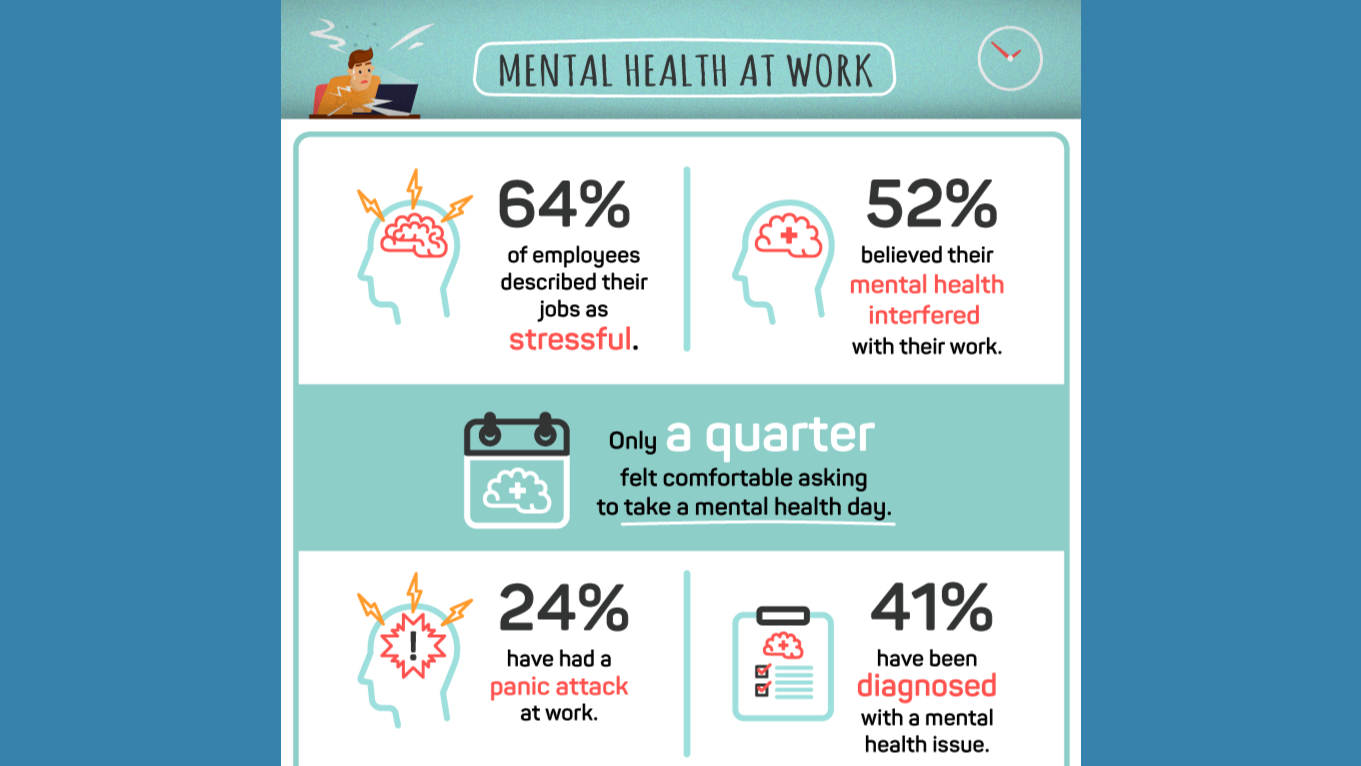
Yes, a CDC study found the construction industry has one of the highest suicide rates in the country, second only to the mining and extraction industry. According to the study, males in construction had a suicide rate of 45.3 deaths per 100,000 people — about twice the overall suicide rate for men in the U.S.
Part of this is due to the access to means but also our industry ‘s high stress and the though process that mental health is weak.
Are there tactics or suggestions to avoid taking work home?
- Sitting in your car listening to music to decompress before you walk in.
- Do not have work emails on phone or turn notifications off.
- Do not let work come into your “me time.”
- Find the ability to breath, ground, get present before walk in.
- Taking a moment to get back into present and not back into work. You only have a small amount of free time so do not waste it.
Some personal suggestions that help my mental health:
- Take your lunch break away from where you work. It helps me have a mental break from work. This can even be in your car.
- Set boundaries on your phone if you are not at work do not answer unless it is an emergency.
- Do not answer calls during lunch it defeats the point to have a break if you are going to work through it.
Conclusion
While these are hard to achieve in our industry, it is a good start. Finally, please do not be afraid to seek professional help, they are there for a reason. Knowing you need help and stepping up to better yourself is a strength not a weakness.