

THE A&T FOUR
ABOUT
Building Communities, Preserving History: The A&T Four
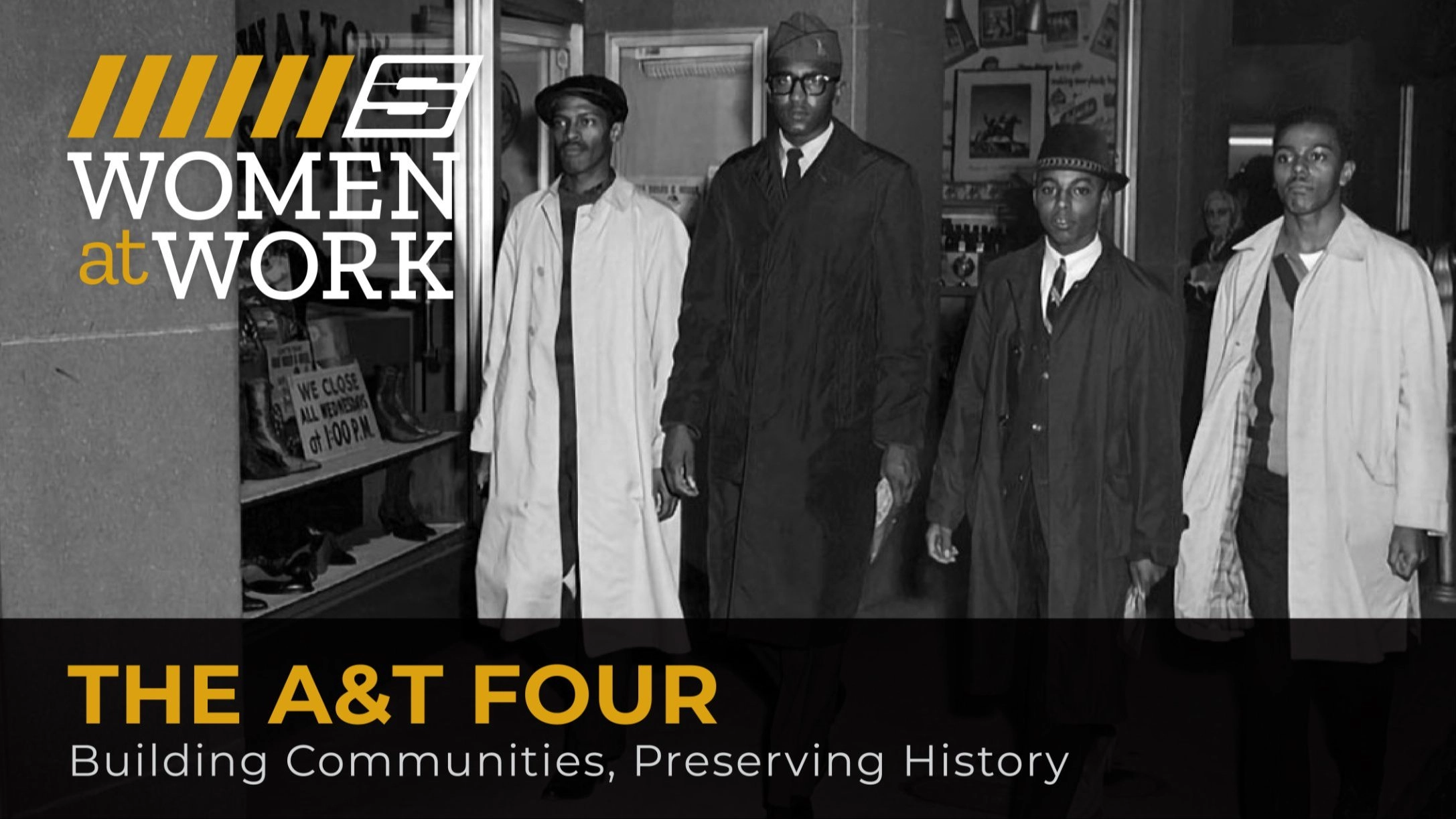
February in Greensboro carries particular weight. It’s the month we celebrate Black history month nationally—and the month that four A&T students made history locally. On February 1st, 1960, Ezell Blair Jr., David Richmond, Franklin McCain, and Joseph McNeil—all students of now North Carolina Agricultural and Technical State University—took it upon themselves to dine in at Woolworth’s lunch counter.
During such a tumultuous time for African Americans—these four young men, inspired and influenced by the nonviolent protest techniques practiced by Mohandas Gandhi as well as the Freedom Rides organized by the Congress for Racial Equality in 1947, were determined to protest for the freedom. With the help of local businessman, Ralph Johns, Blair, Richmond, McCain, and McNeil planned their protest carefully. The four students sat down at the lunch counter at Woolworth’s located in downtown Greensboro. The policy for this establishment was to refuse service to anyone but white people. Obviously being denied service, Blair, Richmond, McCain, and McNeil refused to give up their seats. When the police arrived, they were unable to arrest since there were no signs of provocation. By that time, media outlets were alerted and the sit-in was being televised for the country to witness. The A&T four stayed put until the store closed, and the next day they returned with more students from local colleges.
By February 5, the number of students protesting climbed to 300. Due to the heavy media coverage of this historic protest, more colleges and students began to protest sit-ins around the South and then into the North. Young Black and white people joined in various forms of peaceful protesting—ranging from libraries, hotels, and even beaches.
As a result of the A&T four sit-in and numerous peaceful protests that followed, dining facilities across the South were being integrated by the summer of 1960. At the end of July, when most students were on summer break, Woolworth quietly integrated their lunch counter. Geneva Tisdale, Susie Morrison, Anetha Jones, and Charles Best, four employees of Woolworth, were the first to be served.
This shows that the power of change often rests in the generations’ upcoming. At Samet, we wholeheartedly believe that the power of change is built from the ground up. It takes dedication, discipline, and consistency to make a lasting change in the community we build in. Being headquartered in Greensboro, Samet takes the time to acknowledge and celebrate the prominent figures of, not only Greensboro history but, African American history. We firmly believe in building communities, not just structures, and, with 65 years of building in Greensboro, we understand the magnitude of preserving the history and significance of the A&T Four.